
Evan stood in the dark hallway, feeling foolish. But something in the old man’s voice made him obey. He tiptoed into the kitchen and, without turning on the lights, reached for his landline to call his colleague, Mark, and laugh about the crazy situation.

Beep. Beep. Beep. Fast, mechanical busy tones. The line was dead. He tried his cell phone. No signal. At 5:15 AM? The world suddenly felt wrong, as if someone had quietly cut the invisible wires connecting him to reality.
Curiosity overpowered fear. Evan crawled to the living room window and peeled back the heavy curtain just a fraction of an inch. The street was empty, except for one car. A black sedan with no license plates sat directly opposite his building entrance. The engine was idling, puffing gray exhaust into the cold morning air. The windows were tinted pitch black.
They weren’t just parking. They were waiting.
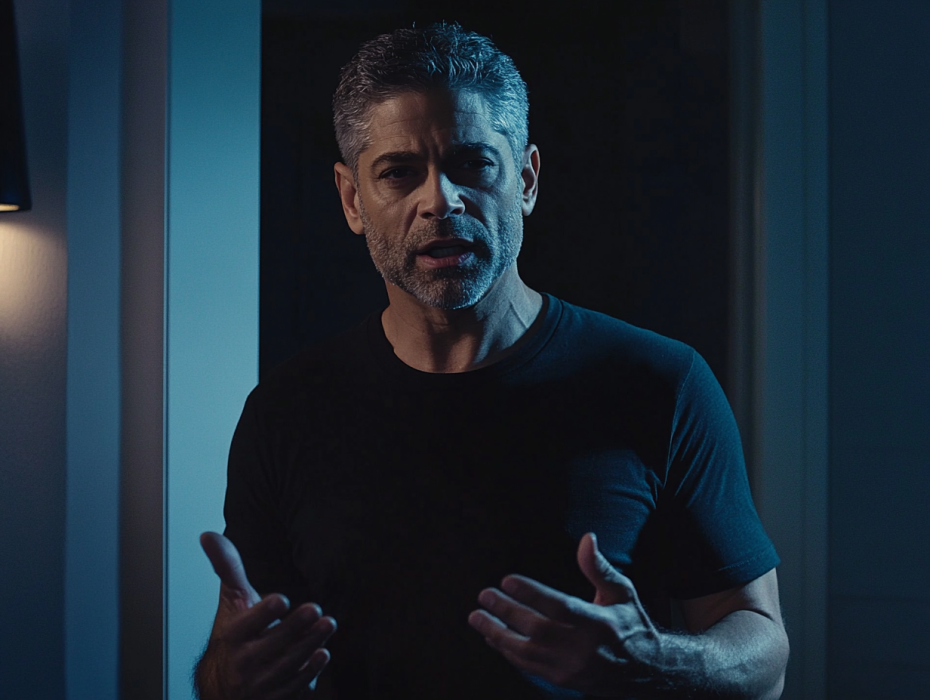
Evan jumped, feeling a hand on his shoulder. He spun around, stifling a scream. Mr. Calder had somehow slipped into his apartment—Evan must have forgotten to lock the deadbolt in his panic. The old man was also staring at the car. His face, usually soft and kind, now looked like stone. “They arrived early,” he whispered. “The timeline shifted.”
“Who are ‘they’?” Evan’s voice trembled. “I’m just a data analyst. I’m nobody. You’re confusing me with someone else!” Calder looked at him with heavy, terrifying pity. “You aren’t the target, Evan. You are the tool. The scapegoat. Your routine… you are too predictable. Coffee at 7:15, subway at 7:30, server room access at 7:55. They studied you. Today, your badge is meant to open a door that no one else can open.”