
On the stone wrist of the “statue” was a watch. Or rather, something resembling a woven bracelet, but it was pressed into the “skin” so deeply that the flesh seemed swollen around it. No sculptor in the world could replicate that kind of muscle tension. The stone was cold, but it felt… wrong. Too smooth.
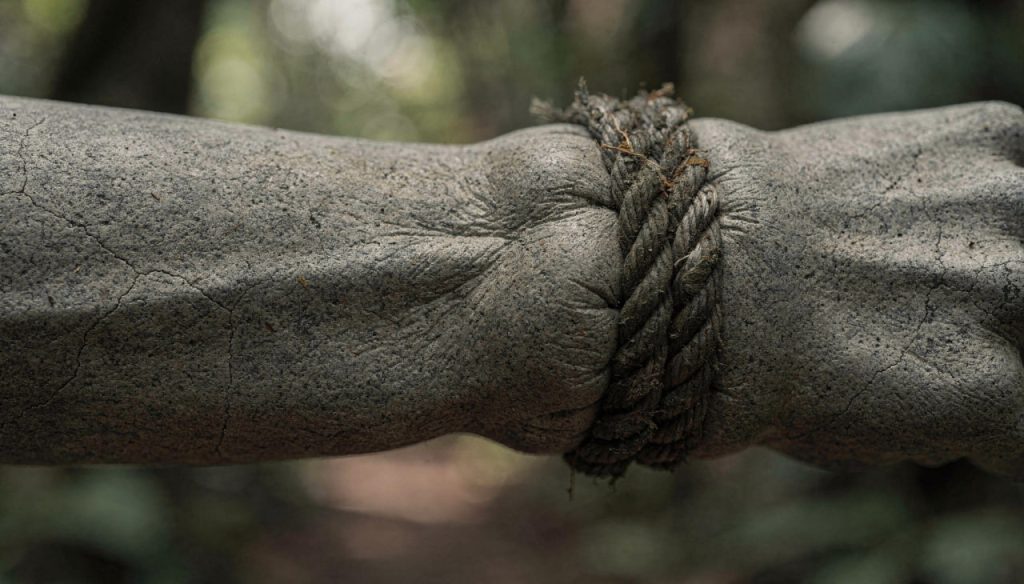
“They look alive,” our grad student, Sarah, whispered. She was right. Too alive. Usually, ancient statues are idealized: straight noses, proud postures. These figures were hunched, imperfect, real. One was missing a finger, another had a broken ear, but the break looked like a healed wound, not chipped granite.
We decided to transport one of the finds to our field lab. Four strong men could barely lift the smallest figure. It weighed twice what a block of limestone that size should weigh. As we loaded it into the truck bed, something happened that made the driver make the sign of the cross.
[readalso]